

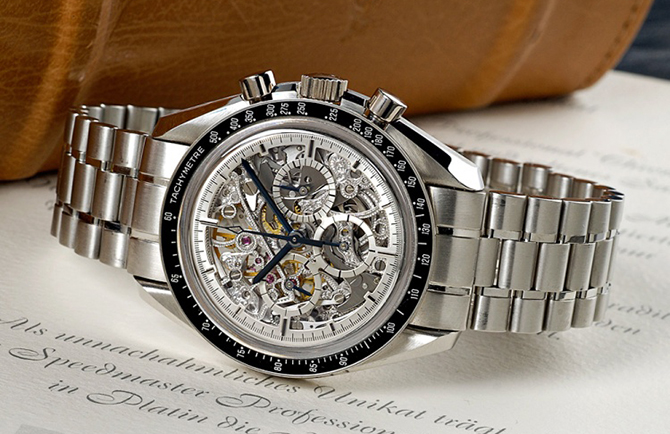
Omega watches are true masterpieces, but sadly, they often fall prey to counterfeit reproductions.
While it’s said that imitation is the sincerest form of flattery, much like flattery, it’s easy to recognize when something’s not quite right—if you know what to look for.
Counterfeits may try to mimic the sophistication and distinctiveness of an Omega design, but even the most convincing replica can’t capture the craftsmanship, precision, and fine details that set an authentic Speedmaster apart from a fake.
It’s all in the details. For a trained eye, identifying a fake can be straightforward. Below are the key elements experts focus on when distinguishing genuine craftsmanship from mass-produced imitations.
1. Omega Serial Number

Omega watches feature a 7- or 8-digit serial number engraved on the back of the case.
Begin by confirming that a serial number is present on the back of your watch, then cross-check the number online to verify that it matches the correct model.
If the serial number is not engraved on the back, the watch is undoubtedly a counterfeit.
2. Hands
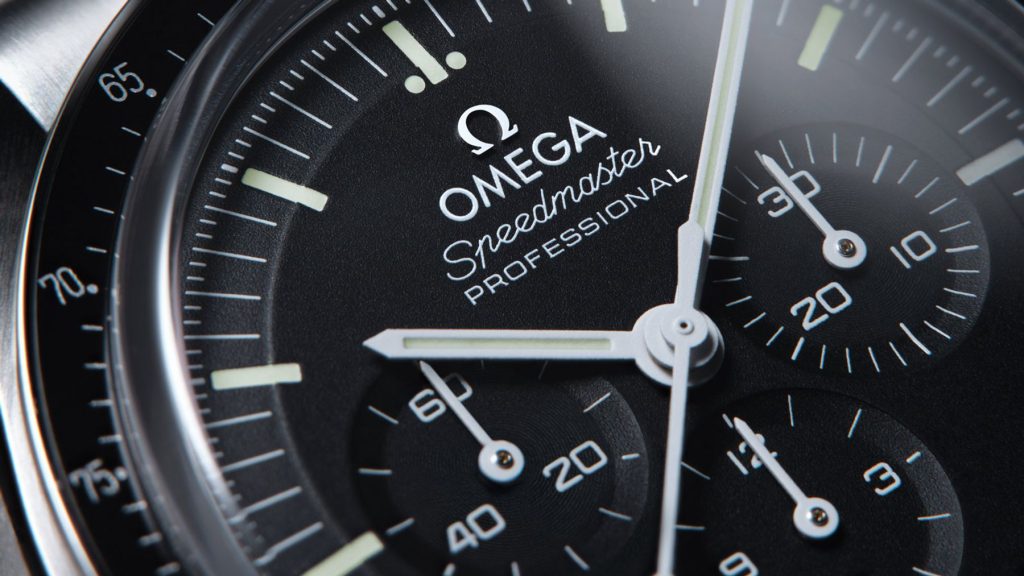
Omega is a brand deeply rooted in the tradition of refined Swiss craftsmanship, with one of the most telling signs of authenticity being the smooth, precise movement of the second hand.
An authentic Swiss-made watch will have a second hand that moves without producing any ticking sounds. Furthermore, for optimal accuracy, the second hand should halt completely when adjusting the time.
When the crown is pulled to set the time, the second hand should stop entirely, without any ticking. If a watch deviates from these genuine features, it is unquestionably a counterfeit.
3. The Lumes
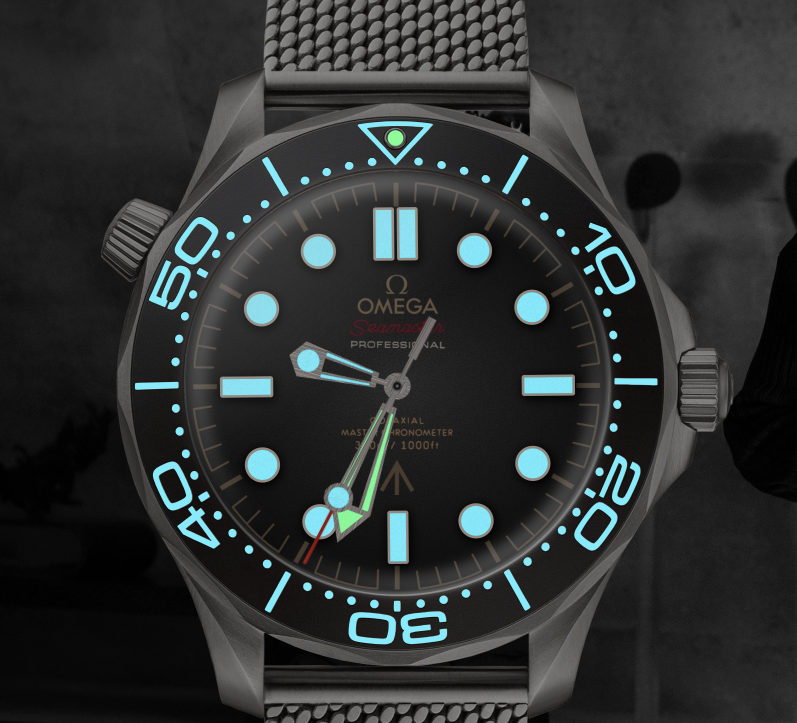
Omega watches, particularly the Seamasters, feature luminescent markers designed to light up the watch face in low-light conditions. While older models used radioactive material for this effect, modern Omegas now use safer photoluminescent pigments.
On genuine Omega watches, the markers, hands, and the bezel’s dot glow far more brightly than any counterfeit could hope to match—the difference is unmistakable. Counterfeits typically feature thin, weak luminescent lines, whereas authentic Omega models have broad, clearly defined lume that covers the entire surface of each marker, ensuring superior brightness.
To test the lume, simply expose the watch to bright light for about 15 minutes and then check its glow in a dark space.
4. Omega Logo
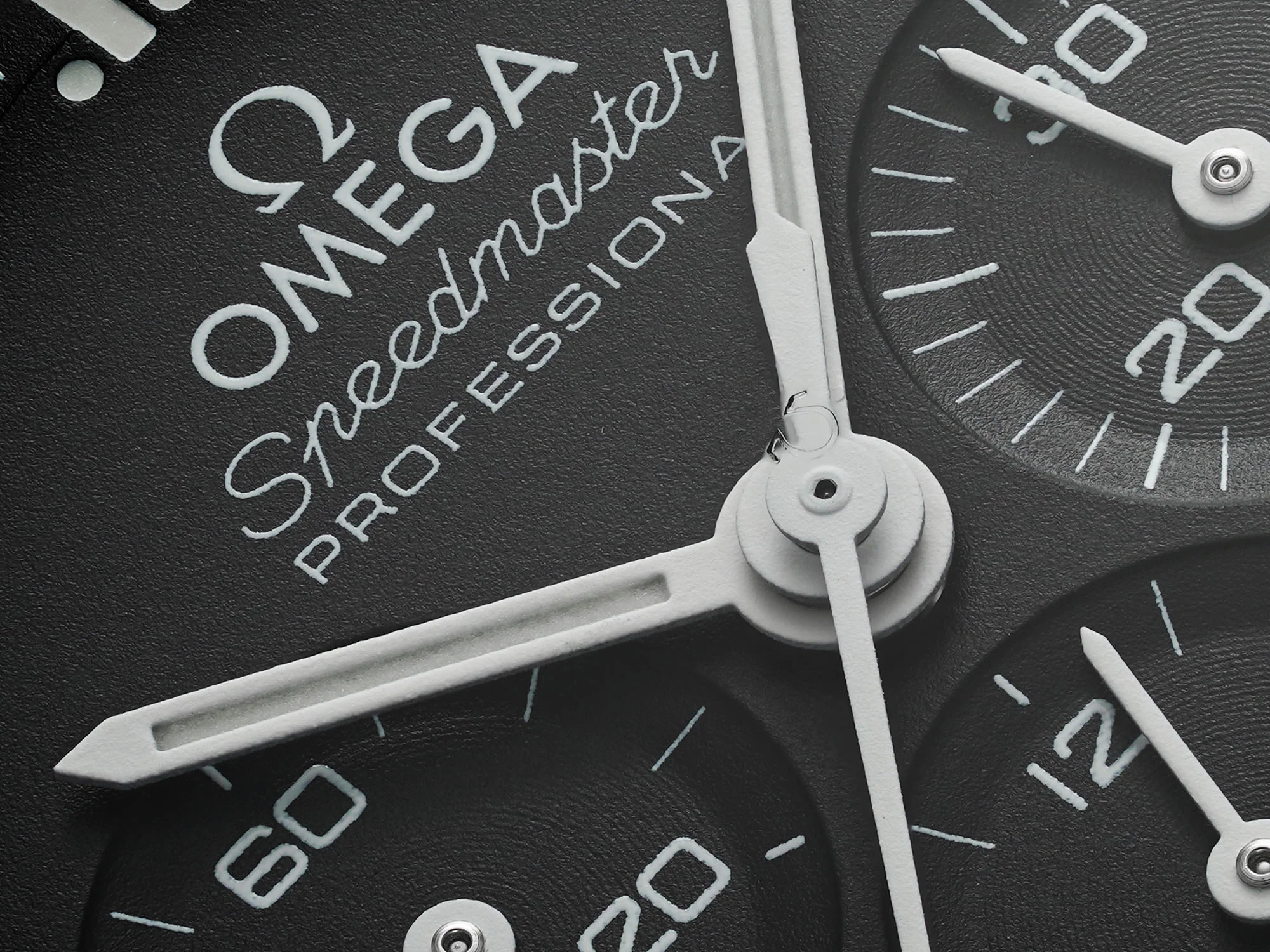
The Omega logo is highly distinctive, but it can be easily overlooked without close attention.
On counterfeit watches, the logo often appears too thick or bold. This is usually because counterfeiters tend to paint the logo rather than engrave, embed, or stamp it, leading to subtle inaccuracies in size and detail.
5. Dial
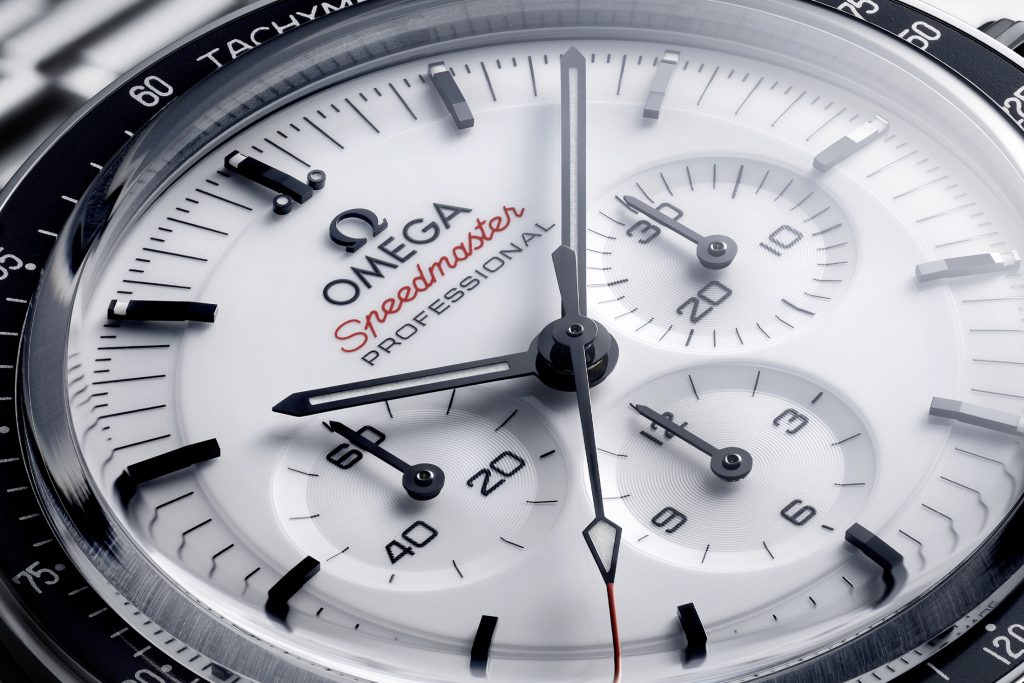
A counterfeit watch often reveals itself through the finer details on the dial. Look for any spelling mistakes, incorrect spacing, or markings that seem poorly executed—these are strong indicators of a fake.
Examine the letters, numbers, and minute markers closely. Are there too many markings? Are the letters spaced awkwardly or does the detailing look bold and painted instead of engraved? These are additional signs of inauthenticity. Omega is renowned for its meticulous precision in every aspect of its design, so any deviation from that standard suggests the watch is not genuine.
6. Sound
If a watch produces any sound, it is not an authentic Omega. The precision of Swiss craftsmanship ensures a smooth, silent ticking motion.
The intricate mechanics beneath the dial are engineered with such exceptional skill that an Omega watch should never make a sound. This quiet operation is a hallmark of Swiss design and serves as a simple yet reliable way to verify the authenticity of an Omega timepiece.
7. Functions
Omega watches, such as the Seamaster, feature intricate functions that are difficult for counterfeiters to replicate. For example, the helium-escape valve is a complex component, often skipped by those producing fake versions due to the precision required.
Additionally, some counterfeits give themselves away by having multiple crowns on the side of the dial that don’t align with any markings or fail to move the hands on the watch face.
The date window is another highly precise feature of Omega watches that counterfeiters struggle to reproduce accurately. A telltale sign of a fake is a misaligned date within the window, or numbers that are too small or don’t fill the space properly.
8. Helium Escape Valve
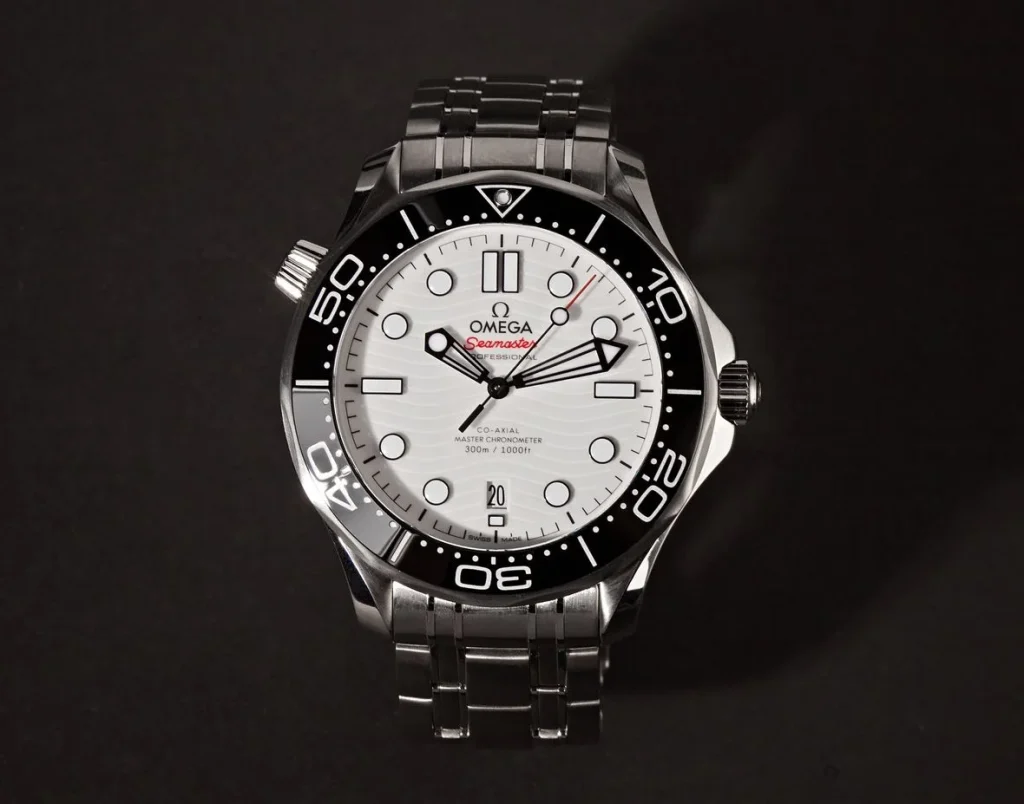
Omega Seamaster watches are equipped with a helium-escape valve to protect the watch from water damage. The absence of this feature or the valve itself is a strong indication of a counterfeit.
Another clear sign of a fake is the valve’s placement. On genuine Seamaster models, the valve is positioned slightly off-center from the 10 o’clock mark on the side of the dial.
In many imitations, if the valve is included at all, it is often incorrectly placed directly in the center of the 10 o’clock position, making it an easy giveaway.
